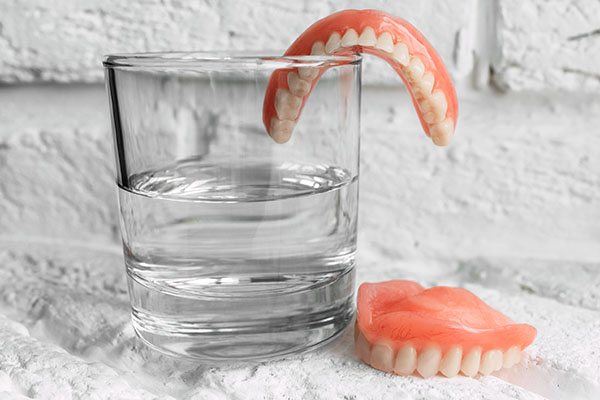
 Receiving dentures is a straightforward process, but it is determined by the type of dentures you receive. There are three types of dentures we will consider for your case, and in doing so, we will walk you through the process in depth at the time of your appointment. This article strives to provide you with an overview of each type of denture and what to expect after your procedure.
Determining a denture type
Dentures are removable prosthetic teeth that replace missing teeth. Made of acrylic or plastic, they are classified by the function they serve, how they are held in the mouth and the number of teeth they replace. The three types of dentures are:
- Full (complete) dentures: These are preferable for those missing all their natural teeth, consisting of two acrylic trays of artificial teeth that fit securely on the gums.
- Partial dentures: These are preferable for those missing one or more teeth but who still have enough healthy natural teeth to support the clasps of the removable appliance.
- Implant-supported dentures: These are preferable for those who have lost most of their teeth in one area of the mouth but still have healthy teeth in another. Their jawbones must be healthy enough to have dental implants surgically placed so they may act as an anchor for the dentures.
Adjusting to dentures
The first month after receiving dentures, no matter the type, can be uncomfortable. This adjustment period is due to the dentures settling into the gums, resulting in the following hurdles.
Denture sores
It is normal for the gums to be a little tender for the first week due to the newly applied pressure. However, if the pressure or sores worsen or do not dissipate after a week, we encourage patients to call our office immediately.
Increased saliva production
Saliva is necessary for keeping the gums healthy and preventing dry mouth. The body knows this, so when it detects the new appliances in the mouth, it automatically signals more things to lubricate and clean. The body will regulate itself when determining how much saliva does the job. Still, drooling and frequent swallowing of saliva may be an issue for the first week or two.
Altered speech
Patients often notice a change in their speech with new dentures. This is because their jaw muscles are adjusting to the appliance. In some cases, this change in speech can take a little time for the mouth to adjust to its new situation. Though one’s speech will not be altered drastically, it usually returns to normal within the first month.
Diet changes
If the patient undergoes an extraction or chooses implant-supported dentures, we recommend sticking to a soft diet until fully healed. This will give the mouth time to get used to the dentures’ new pressure. We also recommend, no matter the denture type, cutting up all foods into small pieces and chewing slowly to keep the dentures in place.
Follow-up appointments
Follow-up appointments with the dentist are very important after receiving new dentures. During these appointments, the dentist will ensure the patient is progressing and ensure no abnormalities are developing in the patient’s gums, natural teeth, or dentures. This is also a time for us to adjust the fit of the dentures if they do not feel comfortable or stable in the mouth after the settling period.
Get started today
We know receiving dentures can be a huge change, and we will help you every step of the way. If you have questions regarding dentures and their process, contact our office. We look forward to answering any questions you may have.
Request an appointment or call Gledhill Dental at 509-800-8410 for an appointment in our Kennewick office.
Related Posts
Dentures are one of the leading tooth replacement options. The process of getting them from consultation to final fitting may look a little different for everyone, depending on factors like the type of denture the patient chooses and any preparation needed. If you are considering dentures, this process overview will give you a general idea…
Dentures are a viable replacement option if you are missing one or multiple teeth. If you are looking for a permanent solution, consider implant-supported dentures. These restoratives are a favorite among dental professionals, as they are known for their durability and long-lasting results. However, patients will need to be able to commit to the somewhat…
Are you looking for tips on caring for your dentures? Read on to learn more. Dentures have existed for hundreds of years and offer a fix for teeth loss, restoring appearance and oral function. According to the American College of Prosthodontists, 36 million Americans depend on dentures. These dental prosthetics are often required when several…