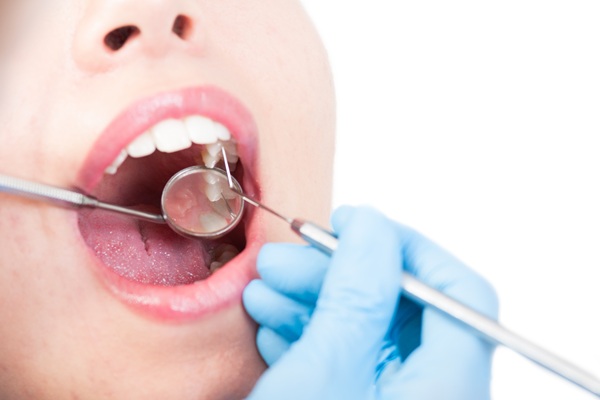
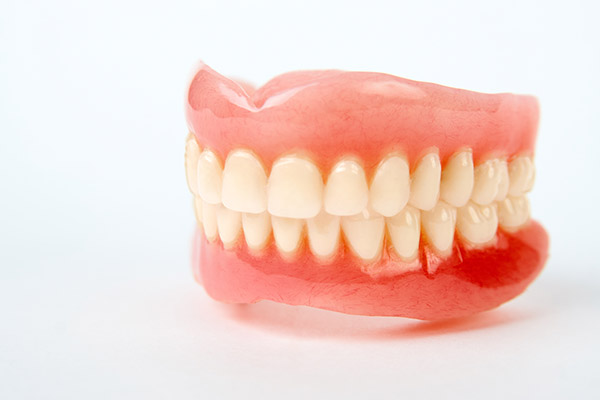
 As teeth get older, you may have to consider replacing them with dentures or partial dentures. This can lead to a lot of questions, especially if a person has never owned dentures previously. It is important to understand the current condition of one’s teeth in order to determine the right denture fit. Teeth naturally wear down over time, sometimes cracking or encountering other problems that require their removal. Keeping teeth structurally sound is an essential way to maintain oral health, and getting dentures may be a reasonable next step to restoring a person’s bite.
Differences between full dentures and partial dentures
Dentures are artificial teeth and gums that can replace missing teeth. Learning the differences between full and partial dentures is key in helping a patient make an educated decision. Though both types of dentures provide the same result, they solve different problems.
Full dentures
When a patient has few or no natural teeth remaining, full dentures are the ideal option. Full dentures are designed to completely replace the missing teeth, giving a patient a brand-new bite with a lower and/or upper arch. A patient with a few natural teeth can ask a dentist about getting them removed and replaced with full dentures or try partial dentures instead.
Types of full dentures
There are two main types of full dentures available for patients. The first is conventional, which requires much more time to create, but once made, should last long into the future. On the other hand, immediate dentures can be placed in the first appointment. These dentures are not meant to last as long and may need several adjustments before fitting properly. It is not uncommon to use these dentures as temporaries while a patient waits for the permanent, conventional dentures to arrive.
Partial dentures
A patient may be a candidate for partial dentures if they still have some natural teeth remaining. Instead of replacing all teeth inside the mouth, partial dentures fill in the gaps where missing teeth once were. The gum and teeth color of the dentures are matched to the patient’s natural ones. Then the dentures are secured to the remaining teeth. While partial dentures can help with structural problems that affect bite and speech, they are also an excellent option for filling in gaps in a smile.
Candidates for dentures
There is no one trait that qualifies a person for dentures. Oftentimes, simply missing teeth is enough to start the conversation about full dentures and partial dentures with a dentist. Denture technology has advanced significantly in the past few decades, providing comfortable, easy appliances on which a patient can rely.
Check out what others are saying about our dental services on Yelp: Dentures and Partial Dentures in Kennewick, WA.
Conclusion
Discussing dentures and partial dentures with a dentist is the easiest way to determine if they are right for an individual. Every person has different needs, and a dentist can advise you on the proper course of action. Dentures are simple to take care of and require minimal maintenance. Teeth are an essential part of everyday living, and there is no need to suffer without them for years on end.
Request an appointment or call Gledhill Dental at 509-800-8410 for an appointment in our Kennewick office.
Related Posts
Dentures are a viable replacement option if you are missing one or multiple teeth. If you are looking for a permanent solution, consider implant-supported dentures. These restoratives are a favorite among dental professionals, as they are known for their durability and long-lasting results. However, patients will need to be able to commit to the somewhat…
Are you looking for tips on caring for your dentures? Read on to learn more. Dentures have existed for hundreds of years and offer a fix for teeth loss, restoring appearance and oral function. According to the American College of Prosthodontists, 36 million Americans depend on dentures. These dental prosthetics are often required when several…
Many people resort to using dentures instead of dental implants in managing tooth loss. Dentures may restore the look of the lost tooth or teeth, but they do not compare to implants. Many dentists may recommend shifting to implants. The goals are to increase comfort and improve function. If you want to know how to…